“Stroke often comes without warning, but in many people the risk builds silently over the years. One such hidden condition is carotid stenosis, where early carotid stenosis treatment in Indore can play a crucial role in preventing a sudden stroke.”
Many patients do not realize they have carotid stenosis until a stroke or mini-stroke happens. In this easy-to-understand guide, Dr. Swati Chinchure explains what carotid stenosis is, why it is dangerous, and how it is diagnosed as well as explains modern treatment options like carotid stenting, which help reduce stroke risk. It focuses on carotid stenosis treatment in Scheme No 140, Indore.
What Is Carotid Stenosis?
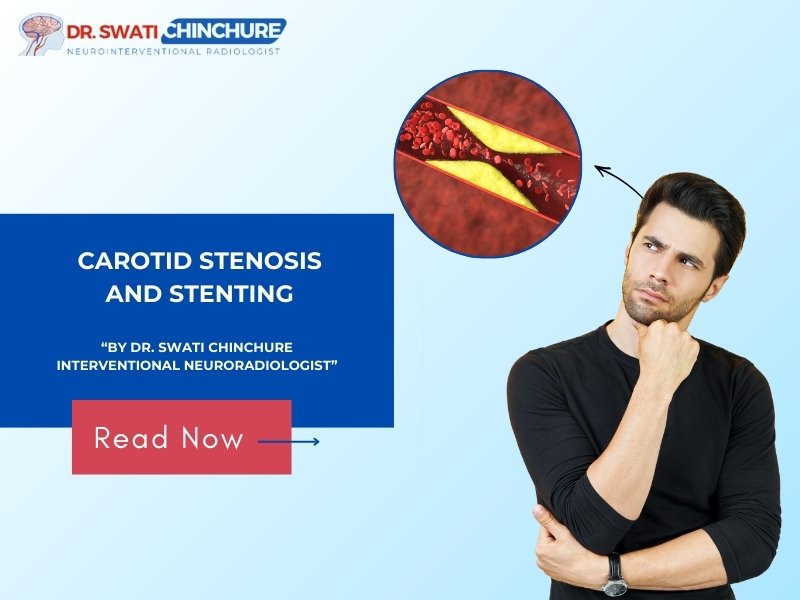
Carotid stenosis means narrowing of the carotid arteries. These arteries are two major blood vessels present on each side of your neck. Their job is simple but extremely important: they supply oxygen-rich blood to the brain.
Over time, fatty deposits called plaque can build up on the inner walls of these arteries. As plaque increases, the artery becomes narrower, and blood flow to the brain reduces. When this narrowing becomes severe, the risk of stroke increases sharply.
Many patients who require carotid stenosis treatment feel completely normal before diagnosis. That is why carotid stenosis is often called a silent condition but carotid stenosis treatment in Scheme No 140, Indore, is available for patient.
Why Are Carotid Arteries So Important for the Brain?
Dr. Swati Chinchure often explains this to patients by saying,
“Brain ko oxygen chahiye hota hai har second. Jab supply kam hoti hai, damage shuru ho jata hai.”
Think of the carotid arteries as highways delivering blood to your brain. If a highway becomes narrow or blocked, traffic slows down or stops. Similarly, when carotid arteries narrow:
- The brain receives less oxygen
- Brain cells begin to suffer
- The risk of stroke increases
Without timely carotid stenosis treatment in Scheme No 140, Indore, reduced blood flow can result in:
- Mini-strokes (TIA – Transient Ischemic Attack)
- Major strokes
- Permanent disability
- Loss of speech, movement, or vision
A Real-Life Story: When Silence Turned Serious
A 58-year-old businessman from Indore visited the clinic after experiencing brief slurring of speech that went away within a few minutes. He felt normal soon after and ignored it, thinking, “shayad thoda stress hoga, kaam zyada ho gaya hoga.” Like many people, he didn’t realize this was a warning sign.
However, his family insisted on a check-up. A simple Doppler test revealed severe carotid stenosis, meaning the blood supply to his brain was dangerously reduced. The doctor explained that even a small delay could have resulted in a major stroke.
Thankfully, the condition was detected in time. With timely carotid stenosis treatment in Scheme No 140, Indore, blood flow was restored, and the risk of stroke was significantly reduced. Within days, the patient was back to his routine, feeling grateful that he didn’t ignore the signs for too long.
This real-life case clearly shows why early carotid stenosis treatment in Indore can truly save lives. Sometimes, the body gives quiet signals and listening to them makes all the difference.
Causes of Carotid Stenosis
Carotid stenosis does not happen suddenly. It usually develops slowly over many years due to everyday health and lifestyle factors. Patients seeking carotid stenosis treatment in Scheme No 140, Indore often have more than one of these risk factors.
- Fatty plaque buildup (atherosclerosis)
Over time, fat and cholesterol stick to the artery walls, slowly narrowing the blood vessel - High blood pressure
Constant high pressure damages artery walls, making it easier for plaque to build up - Diabetes
High sugar levels harm blood vessels and speed up narrowing of the arteries. - Smoking or tobacco use
Tobacco directly damages blood vessels and increases plaque formation. - High cholesterol
Excess “bad” cholesterol adds to plaque buildup inside the carotid arteries. - Sedentary lifestyle
Lack of physical activity slows blood circulation and increases artery blockage risk - Obesity
Extra body weight increases strain on blood vessels and worsens other risk factors.
Who Is at Risk for Carotid Stenosis and Stroke?
Understanding who is at risk for carotid stenosis helps in early prevention. High-risk individuals include:
If you belong to any of these groups, regular screening can help avoid the need for emergency carotid stenosis treatment in Scheme No 140, Indore later.
- People above 50 years
- Patients with high BP or diabetes
- Smokers
- People with a family history of stroke
- Patients with heart disease
- Those with high cholesterol
Symptoms of Carotid Stenosis You Should Never Ignore
Many patients show no symptoms initially. However, warning signs may include:
- Sudden weakness on one side of the body
- Trouble speaking or understanding words
- Sudden vision loss in one eye
- Dizziness or loss of balance
- Facial drooping
- syncopal attacks (syncope)
These symptoms may last only a few minutes (TIA), but they are serious warnings. Immediate evaluation is crucial to prevent a major stroke.
How Carotid Stenosis Is Diagnosed
Diagnosis is usually simple, painless, and quick. Tests include:
Carotid Doppler Ultrasound
A non-invasive test that shows blood flow and narrowing.
CT Angiography
Provides detailed images of arteries.
MR Angiography
Uses magnetic fields to visualize blood vessels.
These imaging tools help Dr. Swati Chinchure decide the best carotid stenosis treatment in Scheme No 140, Indore plan for each patient.
What Is Carotid Stenting?
Carotid stenting is a modern, minimally invasive procedure used to open narrowed carotid arteries.
Instead of open surgery, a small metal mesh tube (stent) is placed inside the artery to keep it open. Blood flow improves immediately, reducing stroke risk.
Many patients prefer carotid stenosis treatment in Scheme No 140, Indore because:
- No large cuts are required
- Recovery is faster
- Hospital stay is shorter
How Does Carotid Stenting Work? (Step-by-Step)
Here’s a simple explanation:
- A small catheter is inserted through the groin or wrist
- It is gently guided to the narrowed carotid artery
- A balloon may be used to widen the artery
- A stent is placed to keep the artery open
- Blood flow to the brain improves immediately
This technique forms a core part of advanced carotid stenosis treatment in Scheme No 140, Indore.
Benefits of Carotid Stenting
Carotid stenting offers multiple advantages:
- Minimally invasive
- Lower surgical risk
- Short hospital stay
- Faster return to daily life
- Significant reduction in stroke risk
That is why carotid stenosis treatment in Scheme No 140, Indore is recommended for suitable patients.
Who Needs Carotid Stenosis Treatment?
Treatment is usually advised when:
- Artery narrowing is severe
- Patient has stroke or TIA symptoms
- Risk of future stroke is high
Early carotid stenosis treatment in Scheme No 140, Indore can prevent life-changing complications.
Carotid Stenosis Treatment Options
Depending on severity, treatment may include:
Lifestyle Changes
- Healthy diet
- Regular exercise
- Quitting smoking
Medications
- Blood thinners
- Cholesterol-lowering drugs
- Blood pressure control
Carotid Stenting
Preferred for many high-risk patients.
Surgery (in Selected Cases)
Recommended only when required.
Dr. Swati Chinchure evaluates each patient individually before planning carotid stenosis treatment in Scheme No 140, Indore.
Recovery After Carotid Stenting
Recovery is usually smooth and quick:
- Most patients walk within hours
- Hospital stay is short
- Normal activities resume soon
Proper follow-up ensures long-term success of carotid stenosis treatment in Scheme No 140, Indore.
Preventing Carotid Stenosis and Stroke
Prevention is always better than cure:
- Eat a heart-healthy diet
- Exercise regularly
- Control BP and sugar
- Avoid smoking and alcohol
- Manage stress
These steps reduce the future need for carotid stenosis treatment in Scheme No 140, Indore.
Why Choose Dr. Swati Chinchure for Carotid Care?
Dr. Swati Chinchure is a highly experienced Interventional Neuroradiologist with expertise in advanced neurovascular procedures. She focuses on patient safety, clear explanations, and modern minimally invasive techniques.
Patients trust her for:
- Accurate diagnosis
- Advanced imaging
- Personalized care
- Proven outcomes in carotid stenosis treatment in Scheme No 140, Indore
When Should You Consult a Specialist Immediately?
Seek urgent care if you notice:
- Sudden weakness
- Speech difficulty
- Vision changes
- Stroke-like symptoms
Early consultation ensures timely carotid stenosis treatment in Scheme No 140, Indore, and better recovery.
Carotid stenosis is silent but dangerous. However, with early diagnosis and modern techniques like stenting, stroke risk can be reduced significantly. Understanding your condition and choosing the right specialist plays a crucial role in long-term brain health.
For expert guidance on carotid stenosis treatment in Scheme No 140, Indore, consult Dr. Swati Chinchure and take a confident step toward stroke prevention.
Winter, Stress, and Stroke Risk, The Hidden Connection
One important factor that many patients ignore is stress, especially during winter months. Cold weather, reduced sunlight, and lifestyle changes often lead to increased stress and anxiety. Stress causes sudden spikes in blood pressure, which directly affects narrowed carotid arteries.
Dr. Swati Chinchure often explains to patients,
“Stress ka BP pe direct effect hota hai. Agar artery already narrow hai, toh stroke ka risk aur badh jata hai.”
This is why many stroke cases linked to carotid stenosis are seen during winter. Managing stress through proper sleep, light exercise, and relaxation techniques becomes an essential part of carotid stenosis treatment in Scheme No 140, Indore.
Why Mini-Strokes Should Never Be Ignored
Many patients experience temporary symptoms like weakness or slurred speech that go away in a few minutes. These episodes are called TIA (Transient Ischemic Attacks) or mini-strokes.
Patients often say,
“Doctor, sirf 10 minute ke liye hua tha, ab toh theek hoon.”
However, these mini-strokes are warning signals. They indicate that blood flow to the brain is already compromised. Ignoring these signs can lead to a major stroke within days or weeks.
Early diagnosis after a TIA allows timely carotid stenosis treatment in Scheme No 140, Indore, preventing permanent damage.
How Family Awareness Saves Lives
In many real cases, it is a family member who notices something wrong first, a slight change in speech, facial drooping, or confusion.
One patient’s wife from Indore shared,
“Unki baat karne ka tareeka thoda alag lag raha tha. Mujhe doubt hua aur hum turant hospital gaye.”
That decision made all the difference. Tests confirmed severe carotid narrowing, and timely carotid stenosis treatment in Scheme No 140, Indore, prevented a major stroke.
Tip for families:
If you notice even small neurological changes, don’t wait. Immediate evaluation can save your loved one’s life.
Life After Carotid Stenting, What Patients Can Expect
Many patients worry about life after the procedure. The good news is that most people return to normal life very quickly.
After successful carotid stenting Indore, patients can usually:
- Walk the same day
- Resume daily activities within a few days
- Travel safely after medical clearance
- Continue work with minor lifestyle adjustments
Dr. Swati Chinchure guides patients step-by-step, ensuring they understand medication schedules, follow-up scans, and lifestyle changes.
She often reassures patients by saying,
“Stent lagna matlab life rukna nahi. Bas thoda disciplined rehna zaroori hai.”
Diet and Lifestyle Tips After Carotid Stenosis Treatment
Long-term success of carotid stenosis treatment in Scheme No 140, Indore, depends heavily on lifestyle management. Small changes can make a big difference.
Healthy Eating Habits
- Reduce fried and oily food
- Eat more fruits and vegetables
- Choose whole grains
- Limit salt intake
Daily Physical Activity
- 30 minutes of walking daily
- Light stretching or yoga
- Avoid sudden heavy exertion
Avoid Tobacco Completely
Smoking directly damages blood vessels and increases plaque buildup.
Medication Adherence
Never skip medicines prescribed after carotid stenting. They help keep the artery open and prevent clot formation.
Common Myths About Carotid Stenosis
Let’s clear some common misunderstandings:
“Carotid stenosis happens only in old age”
It can affect middle-aged individuals too, especially with risk factors.
“No symptoms means no problem”
Many patients remain symptom-free until a stroke occurs.
“Surgery is the only option”
Modern carotid stenting Indore offers a minimally invasive alternative.
Doctor’s Message to Patients and Families
Dr. Swati Chinchure believes that awareness is as powerful as treatment. She often tells patients:
“Stroke prevent ho sakta hai, agar hum time pe problem pakad lein. Carotid stenosis silent hota hai, isliye screening aur awareness bahut important hai.”
Her patient-centric approach makes carotid stenosis treatment Indore not just a medical process, but a guided journey toward long-term brain health.
Frequently Asked Questions (FAQs)
1. What is carotid stenosis?
Carotid stenosis is a condition where the carotid arteries in the neck become narrow due to plaque buildup. These arteries supply blood to the brain, and narrowing can reduce blood flow. Many patients seek carotid stenosis treatment in Scheme No 140, Indore, after learning about this condition during routine scans or after stroke-like symptoms.
2. Why is carotid stenosis dangerous?
Carotid stenosis increases the risk of stroke. When blood flow to the brain is reduced or blocked, brain cells can get damaged. Early carotid stenosis treatment Indore helps lower the risk of serious complications like permanent disability.
3. What are the common symptoms of carotid stenosis?
Some people may not have symptoms initially. When symptoms appear, they may include weakness on one side of the body, difficulty speaking, blurred vision, or sudden dizziness. These signs indicate the need for immediate carotid stenosis treatment Indore.
4. How is carotid stenosis diagnosed?
Carotid stenosis is usually diagnosed using imaging tests such as carotid Doppler ultrasound, CT angiography, or MR angiography. These tests help doctors decide the best approach for carotid stenosis treatment in Scheme No 140, Indore,
5. What is carotid stenting?
Carotid stenting is a minimally invasive procedure where a small metal mesh tube (stent) is placed inside the narrowed artery to keep it open. Many patients prefer carotid stenting Indore because it avoids open surgery and allows quicker recovery.
6. Who is a good candidate for carotid stenting?
Patients with significant artery narrowing, those who have had a stroke or mini-stroke, or those at high surgical risk may be advised carotid stenting Indore. The decision depends on individual medical evaluation.