
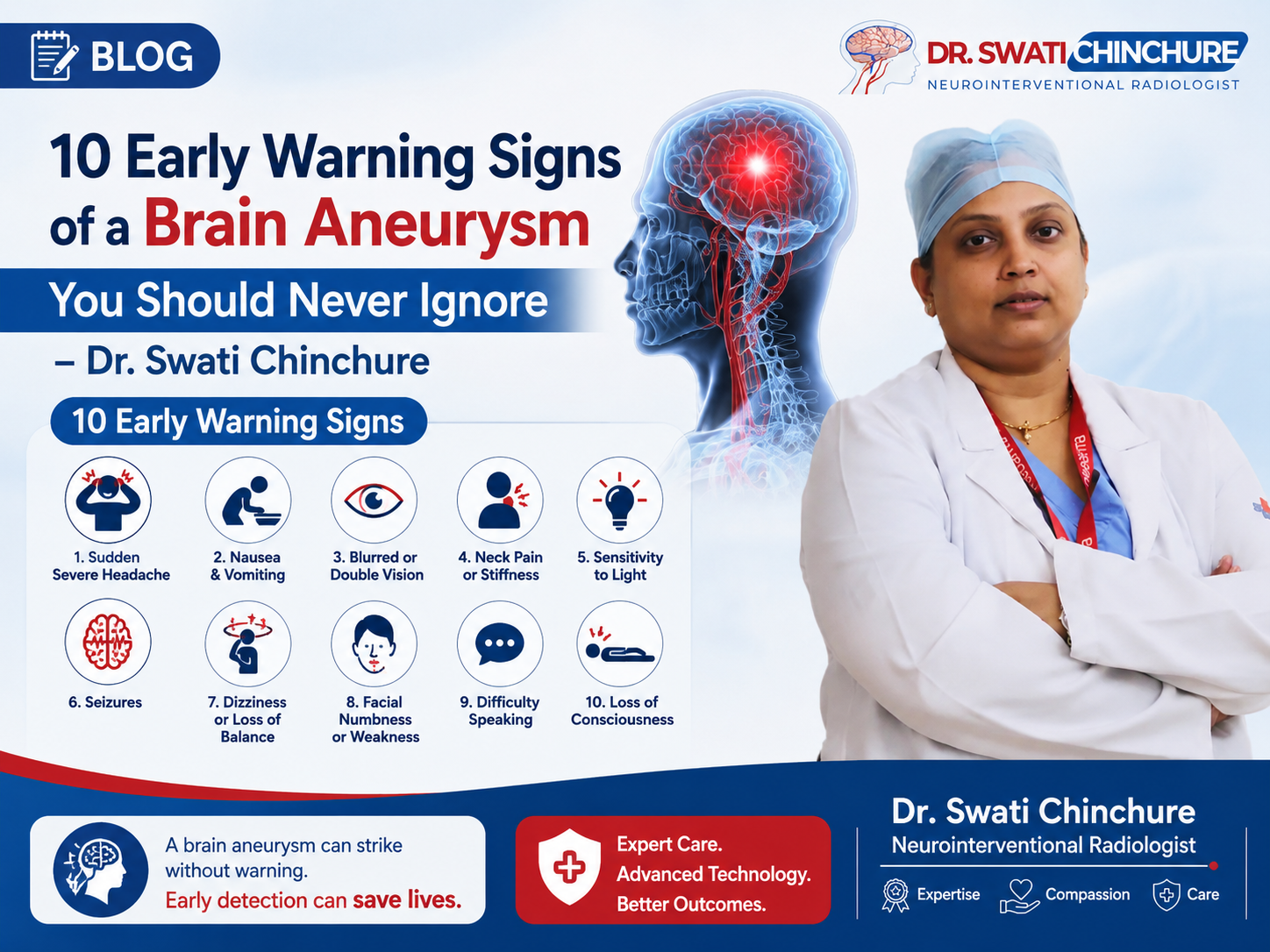
Brain Aneurysm Treatment in Indore is available with advanced neurointerventional techniques under the expert care of Dr. Swati Chinchure, a highly experienced Neurointervention and Neuroradiology Specialist. With over 10 years of experience and specialized training from Sree Chitra Tirunal Institute for Medical Sciences and Technology, Trivandrum, Dr. Swati Chinchure has introduced advanced neurointerventional procedures such as mechanical thrombectomy, aneurysm coiling, flow diverter placement, and intracranial stenting in Central India. Early diagnosis of a brain aneurysm is extremely important because timely treatment can significantly reduce the risk of life-threatening complications. Recognizing the warning signs early and seeking immediate medical attention can help improve treatment outcomes and protect brain health.
Best Neurointervention Specialist in Indore – Dr. Swati Chinchure
Best Neurointervention Specialist in Indore is Dr. Swati Chinchure, known for her expertise in diagnosing and treating complex brain and vascular disorders using advanced minimally invasive neurointerventional techniques. She has successfully treated patients suffering from brain aneurysms, acute stroke, carotid artery disease, intracranial stenosis, and cerebral arteriovenous malformations.
Dr. Swati Chinchure completed her:
- MBBS – Government Medical College, Nanded
- DMRD – Indira Gandhi Government Medical College, Nagpur
- DNB – Yashoda Hospitals, Hyderabad
- DM in Neurointervention & Neuroradiology – Sree Chitra Tirunal Institute, Trivandrum
- Fellowship in Neurointerventions (FNVIR)
Her advanced academic background and extensive clinical experience enable her to provide comprehensive neurovascular care using the latest evidence-based treatment approaches.
What is a Brain Aneurysm?
Brain Aneurysm is a serious condition in which a weak area in the wall of a blood vessel inside the brain begins to bulge or balloon outward. In many cases, a brain aneurysm develops slowly without causing noticeable symptoms. However, if the aneurysm ruptures, it can lead to bleeding inside the brain, resulting in a life-threatening medical emergency known as a hemorrhagic stroke.
Early diagnosis is extremely important because many unruptured aneurysms can be successfully treated before serious complications occur.
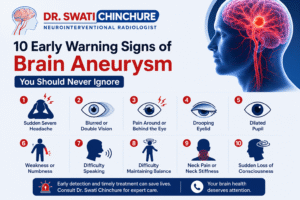
10 Early Warning Signs of a Brain Aneurysm You Should Never Ignore
Brain Aneurysm Warning Signs should never be ignored because they may indicate an underlying problem requiring immediate medical evaluation. Although some aneurysms remain silent, others produce symptoms before rupture.
1. Sudden Severe Headache
One of the most common warning signs is an intense headache that develops suddenly and feels different from any previous headache.
Many patients describe it as the “worst headache of their life.”
2. Blurred or Double Vision
A growing aneurysm may press on nearby nerves controlling eye movement, resulting in blurred vision, double vision, or difficulty focusing.
Persistent visual disturbances should always be evaluated by a specialist.
3. Pain Around or Behind the Eye
Pain around one eye or behind the eye may occur when an aneurysm compresses surrounding nerves.
This symptom may gradually worsen if left untreated.
4. Drooping Eyelid
Compression of the cranial nerves may cause one eyelid to droop unexpectedly.
This symptom should never be ignored, particularly when accompanied by headache or visual changes.
5. Dilated Pupil
An aneurysm affecting nearby nerves may result in enlargement of one pupil compared to the other.
Any sudden change in pupil size requires urgent neurological evaluation.
6. Weakness or Numbness
Weakness or numbness affecting one side of the face, arm, or leg may indicate pressure on important areas of the brain.
Immediate medical assessment is essential.
7. Difficulty Speaking
Patients may develop slurred speech, difficulty finding words, or problems understanding conversations.
Speech difficulties can indicate significant neurological involvement.
8. Difficulty Maintaining Balance
Loss of coordination, dizziness, or difficulty walking may occur if brain function becomes affected.
Persistent balance problems require prompt neurological consultation.
9. Neck Pain or Neck Stiffness
Some patients experience neck pain or stiffness before or during aneurysm rupture.
These symptoms may be associated with irritation caused by bleeding around the brain.
10. Sudden Loss of Consciousness
Loss of consciousness is one of the most serious warning signs and usually indicates a medical emergency requiring immediate hospitalization.
Early intervention can be life-saving.
Who Is at Higher Risk of Developing a Brain Aneurysm?
Brain Aneurysm Risk Factors vary from person to person. While anyone can develop an aneurysm, certain individuals are at greater risk.
Common risk factors include:
- High blood pressure
- Smoking
- Family history of brain aneurysm
- Increasing age
- Connective tissue disorders
- Polycystic kidney disease
- Head injury
- Excessive alcohol consumption
Managing these risk factors can help lower the chances of developing serious neurovascular conditions.
How Is a Brain Aneurysm Diagnosed?
Brain Aneurysm Diagnosis involves advanced imaging studies that allow specialists to evaluate the blood vessels supplying the brain.
Depending on the patient’s condition, investigations may include:
- CT Scan
- MRI Brain
- CT Angiography
- MR Angiography
- Digital Subtraction Angiography (DSA)
Accurate diagnosis helps determine the size, location, and severity of the aneurysm, allowing doctors to choose the most appropriate treatment plan.
Advanced Brain Aneurysm Treatment by Dr. Swati Chinchure
Brain Aneurysm Treatment in Indore has advanced significantly with the introduction of modern neurointerventional procedures that offer effective treatment with smaller incisions, faster recovery, and improved patient outcomes. Dr. Swati Chinchure, one of the leading Neurointervention Specialists in Indore, provides comprehensive evaluation and advanced minimally invasive treatment for brain aneurysms based on each patient’s individual condition.
Every patient undergoes detailed clinical assessment and advanced neuroimaging before deciding the most appropriate treatment plan. The primary objective is to prevent aneurysm rupture, reduce complications, and preserve normal brain function.
Advanced Neurointervention Procedures for Brain Aneurysm
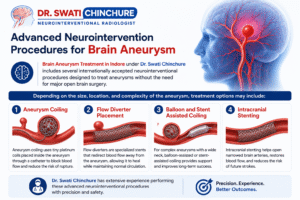
Brain Aneurysm Treatment in Indore under Dr. Swati Chinchure includes several internationally accepted neurointerventional procedures designed to treat aneurysms without the need for major open brain surgery.
Depending on the size, location, and complexity of the aneurysm, treatment options may include:
Aneurysm Coiling
Aneurysm coiling is a minimally invasive procedure in which tiny platinum coils are placed inside the aneurysm through a catheter. These coils help block blood flow into the aneurysm, reducing the risk of rupture.
Flow Diverter Placement
Flow diverters are specialized stents placed inside the parent blood vessel to redirect blood flow away from the aneurysm. Over time, the aneurysm gradually heals while maintaining normal circulation.
Balloon and Stent Assisted Coiling
For complex aneurysms with a wide neck, balloon-assisted or stent-assisted coiling provides additional support during the procedure and improves long-term treatment success.
Intracranial Stenting
Patients with narrowing of the brain arteries due to atherosclerotic disease may benefit from intracranial stenting, which restores blood flow and reduces the risk of future strokes.
Dr. Swati Chinchure has extensive experience performing these advanced neurointerventional procedures with precision and safety.
Stroke Neurointervention by Dr. Swati Chinchure
Stroke Treatment in Indore has been transformed by modern neurointerventional techniques. Dr. Swati Chinchure has introduced advanced Mechanical Thrombectomy, an emergency procedure used to remove blood clots from blocked brain arteries in patients with acute ischemic stroke.
Mechanical thrombectomy offers several benefits:
- Rapid restoration of blood flow
- Improved neurological recovery
- Reduced disability
- Better long-term functional outcomes
- Minimally invasive treatment
Early treatment is critical, as timely intervention significantly improves the chances of recovery.
Diseases Treated by Dr. Swati Chinchure
Neurointervention Specialist in Indore Dr. Swati Chinchure provides advanced diagnosis and treatment for a wide range of complex neurovascular conditions.
Her areas of expertise include:
- Brain Aneurysm
- Acute Ischemic Stroke
- Mechanical Thrombectomy
- Carotid Artery Stenosis
- Intracranial Arterial Stenosis
- Cerebral Arteriovenous Malformation (AVM)
- Subarachnoid Hemorrhage
- Brain Vascular Disorders
- Neurovascular Emergencies
Her comprehensive approach allows patients to receive complete neurovascular care under one roof.
Why Choose Dr. Swati Chinchure?
Best Neurointervention Specialist in Indore is a title patients associate with Dr. Swati Chinchure because of her advanced training, extensive experience, and commitment to delivering evidence-based neurological care.
Patients trust Dr. Swati Chinchure because of:
- More than 10 years of experience in Neurointervention
- DM in Neurointervention & Neuroradiology
- Specialized training from Sree Chitra Tirunal Institute, Trivandrum
- Expertise in Mechanical Thrombectomy
- Advanced Aneurysm Coiling procedures
- Flow Diverter Placement
- Intracranial Stenting
- Minimally invasive neurovascular procedures
- Personalized treatment plans
- Comprehensive patient care
Her focus remains on early diagnosis, accurate treatment planning, and achieving the best possible neurological outcomes.
Experience and Qualifications
Neurointervention Specialist in Indore Dr. Swati Chinchure has built an impressive academic and professional career dedicated to advanced brain and vascular interventions.
Educational Qualifications
- MBBS – Government Medical College, Nanded
- DMRD – Indira Gandhi Government Medical College, Nagpur
- DNB – Yashoda Hospitals, Hyderabad
- DM in Neurointervention & Neuroradiology – Sree Chitra Tirunal Institute for Medical Sciences and Technology, Trivandrum
- Fellowship in Neurointerventions (FNVIR)
Professional Experience
- Consultant Neurointervention – Medanta Hospital, Indore
- Consultant Neurointervention – Vishesh Jupiter Hospital, Indore
- Former Consultant – Aster Medcity, Kochi
Her years of clinical experience have enabled her to successfully manage numerous complex neurovascular cases using advanced interventional techniques.
Summary
Brain Aneurysm Treatment in Indore requires early diagnosis, expert evaluation, and advanced neurointerventional care to prevent life-threatening complications. Warning signs such as sudden severe headache, vision changes, facial weakness, speech difficulty, or loss of consciousness should never be ignored.
With specialized training in Neurointervention and Neuroradiology, Dr. Swati Chinchure offers comprehensive diagnosis and minimally invasive treatment for brain aneurysms, stroke, carotid artery disease, and other complex neurovascular disorders. Her expertise in aneurysm coiling, mechanical thrombectomy, flow diverter placement, and intracranial stenting allows patients to receive modern, evidence-based care with improved treatment outcomes.
FAQs – Brain Aneurysm Treatment in Indore
Who is the best Neurointervention Specialist in Indore for Brain Aneurysm treatment?
Dr. Swati Chinchure is one of the leading Neurointervention Specialists in Indore with expertise in brain aneurysm treatment, aneurysm coiling, and advanced neurovascular procedures.
What are the early warning signs of a Brain Aneurysm?
Common warning signs include sudden severe headache, blurred vision, double vision, drooping eyelid, weakness, speech difficulty, neck pain, and loss of consciousness.
Can a Brain Aneurysm be treated without open surgery?
Yes. Many brain aneurysms can be treated using minimally invasive neurointerventional procedures such as aneurysm coiling and flow diverter placement.
What is Mechanical Thrombectomy?
Mechanical thrombectomy is an advanced minimally invasive procedure used to remove blood clots from blocked brain arteries during an acute ischemic stroke.
When should I consult a Neurointervention Specialist?
You should consult a specialist immediately if you experience sudden severe headache, weakness, vision changes, difficulty speaking, or symptoms suggestive of stroke or brain aneurysm.
What diseases does Dr. Swati Chinchure treat?
She specializes in brain aneurysm, stroke, carotid stenosis, intracranial stenosis, cerebral AV malformation, and other neurovascular disorders.
Where does Dr. Swati Chinchure practice?
Dr. Swati Chinchure is associated with Medanta Hospital, Indore, and Vishesh Jupiter Hospital, Indore, where she provides advanced neurointerventional care.
Why choose Dr. Swati Chinchure for Brain Aneurysm treatment?
Patients choose Dr. Swati Chinchure because of her advanced academic qualifications, specialized neurointervention training, extensive clinical experience, minimally invasive treatment expertise, and patient-centered approach.
Conclusion – 10 Early Warning Signs of a Brain Aneurysm You Should Never Ignore
Brain Aneurysm Treatment in Indore is most effective when warning signs are recognized early and appropriate medical care is received without delay. Symptoms such as sudden severe headache, blurred vision, facial weakness, speech difficulty, or loss of consciousness should never be ignored, as they may indicate a potentially life-threatening brain aneurysm or stroke.
Dr. Swati Chinchure, one of the leading Neurointervention Specialists in Indore, combines advanced training, modern neurointerventional techniques, and years of clinical experience to provide comprehensive treatment for brain aneurysms and other complex neurovascular conditions. Through early diagnosis, minimally invasive procedures, and personalized patient care, she is committed to helping patients achieve the best possible neurological recovery and long-term brain health.