

If you are searching for expert Subarachnoid Hemorrhage treatment in Indore, consulting an experienced neurointervention specialist at the earliest can significantly improve recovery outcomes.
Dr. Swati Chinchure is a highly experienced Brain Specialist in Indore with expertise in diagnosing and treating complex brain vascular disorders using advanced neurointerventional techniques. She specializes in minimally invasive procedures for brain aneurysms, stroke, vascular malformations, and other neurological emergencies, helping patients receive faster treatment with better recovery.
A sudden, severe headache that feels like the “worst headache of your life” should never be ignored. While headaches are common and often harmless, in some cases, they may indicate a serious medical emergency known as Subarachnoid Hemorrhage (SAH). This condition requires immediate medical attention because even a short delay in treatment can lead to permanent brain damage, disability, or even become life-threatening.
Many people are unaware of this condition until it affects them or someone close to them. Unlike a regular headache, Subarachnoid Hemorrhage occurs due to bleeding in the space surrounding the brain. The bleeding increases pressure inside the skull and disrupts the normal supply of oxygen-rich blood to brain tissue. Without prompt treatment, the damage can progress rapidly.
In this detailed guide, you will learn everything about Subarachnoid Hemorrhage its causes, symptoms, diagnosis, treatment options, recovery process, and ways to reduce your risk.
Why Choose Dr. Swati Chinchure for Subarachnoid Hemorrhage Treatment in Indore?
When dealing with a neurological emergency, choosing the right specialist can make a significant difference in treatment success and recovery. Subarachnoid Hemorrhage is a time-sensitive condition that requires immediate diagnosis, expert decision-making, and advanced medical intervention.
If you are looking for trusted Subarachnoid Hemorrhage treatment in Indore, early consultation with an experienced Brain Specialist in Indore can help prevent complications and improve outcomes.
Dr. Swati Chinchure has extensive experience in managing complex neurovascular conditions and offers evidence-based treatment using the latest minimally invasive neurointerventional procedures.
Patients trust Dr. Swati Chinchure because she offers:
- Advanced diagnosis of brain vascular disorders using modern imaging techniques.
- Expertise in minimally invasive neurointerventional procedures that reduce recovery time compared to conventional surgery.
- Specialized treatment for brain aneurysms, acute ischemic stroke, cerebral vascular malformations, and intracranial vessel diseases.
- Mechanical thrombectomy for emergency stroke management.
- Brain aneurysm coiling and flow diverter procedures.
- Personalized treatment plans based on every patient’s medical condition.
- Comprehensive follow-up care to ensure long-term neurological health.

What is a Subarachnoid Hemorrhage?
Dr. Swati Chinchure, an experienced Brain Specialist in Indore, explains that prompt diagnosis and advanced neurointerventional treatment can significantly improve the chances of recovery while reducing long-term neurological complications.
A Subarachnoid Hemorrhage (SAH) is a serious medical condition in which bleeding occurs in the space between the brain and the thin tissues that cover it, known as the subarachnoid space. This space normally contains cerebrospinal fluid (CSF), which cushions and protects the brain.
When bleeding occurs in this area, blood mixes with the cerebrospinal fluid, causing sudden pressure inside the skull. As this pressure increases, the brain may not receive enough oxygen and nutrients. If left untreated, this can lead to irreversible brain injury.
Unlike many neurological conditions that develop gradually, a Subarachnoid Hemorrhage usually occurs suddenly and without warning. It is considered a medical emergency that requires immediate evaluation and treatment.
What Causes Subarachnoid Hemorrhage?
A Subarachnoid Hemorrhage can develop due to several underlying medical conditions. Identifying the exact cause helps doctors choose the most appropriate treatment plan.
Is a Ruptured Brain Aneurysm the Most Common Cause of Subarachnoid Hemorrhage?
Yes. A ruptured brain aneurysm is the leading cause of Subarachnoid Hemorrhage.
A brain aneurysm is a weak, balloon-like bulge that forms in the wall of a brain artery. Over time, the weakened vessel wall may rupture, causing blood to leak into the subarachnoid space. This sudden bleeding can rapidly increase pressure inside the brain and requires emergency treatment.
Dr. Swati Chinchure specializes in advanced aneurysm coiling procedures, which are commonly performed as part of Subarachnoid Hemorrhage treatment in Indore.
Can a Head Injury Cause Subarachnoid Hemorrhage?
Yes. Severe head trauma caused by road traffic accidents, falls, sports injuries, or workplace accidents can damage blood vessels in the brain, resulting in Subarachnoid Hemorrhage.
Traumatic brain injuries should always be evaluated immediately, especially if they are associated with severe headache, vomiting, or loss of consciousness.
Can Arteriovenous Malformations (AVMs) Cause Brain Bleeding?
Yes. Arteriovenous Malformations (AVMs) are abnormal connections between arteries and veins in the brain. These fragile blood vessels are prone to rupture, leading to Subarachnoid Hemorrhage.
Early diagnosis and treatment of AVMs can reduce the risk of future bleeding and neurological complications.
Does High Blood Pressure Increase the Risk of Subarachnoid Hemorrhage?
Yes. Long-standing uncontrolled hypertension weakens the walls of blood vessels, increasing the likelihood of aneurysm formation and rupture.
Keeping blood pressure under control is one of the most effective ways to reduce the risk of brain hemorrhage.
Can Blood Clotting Disorders Lead to Subarachnoid Hemorrhage?
Yes. Certain inherited bleeding disorders, liver disease, or blood-thinning medications may increase the risk of spontaneous bleeding around the brain.
People with clotting disorders should undergo regular medical evaluation and consult a Brain Specialist in Indore if they develop unusual neurological symptoms.
Who Is at Higher Risk of Developing Subarachnoid Hemorrhage?
Although this condition can affect anyone, certain individuals have a significantly higher risk.
You may be more likely to develop Subarachnoid Hemorrhage if you:
- Have uncontrolled high blood pressure.
- Smoke regularly.
- Consume excessive alcohol.
- Have a family history of brain aneurysms.
- Have previously been diagnosed with a brain aneurysm.
- Are over the age of 40.
- Have inherited vascular disorders.
- Have experienced previous brain hemorrhage.
Understanding these risk factors allows doctors to recommend early screening and preventive care before complications occur.
What Are the First Signs and Symptoms of Subarachnoid Hemorrhage?
The symptoms of Subarachnoid Hemorrhage usually appear suddenly and should never be ignored. Recognizing these warning signs and seeking immediate Subarachnoid Hemorrhage treatment in Indore can save lives.
Is a Sudden Severe Headache the Most Common Symptom?
Yes. The hallmark symptom is a sudden, intense headache often described as the “worst headache of my life.”
Unlike a migraine, this headache reaches maximum intensity within seconds and may be accompanied by other neurological symptoms.
Can Neck Stiffness Indicate a Brain Hemorrhage?
Yes. Blood leaking into the subarachnoid space irritates the protective membranes around the brain, resulting in neck stiffness and severe pain.
Can Nausea and Vomiting Be Warning Signs?
Yes. Increased pressure inside the skull commonly causes persistent nausea and repeated vomiting.
Can Vision Problems Occur During Subarachnoid Hemorrhage?
Yes. Patients may experience blurred vision, double vision, or sensitivity to bright light due to increased intracranial pressure.
Can Confusion or Loss of Consciousness Occur?
Yes. As pressure inside the brain increases, patients may become confused, drowsy, or lose consciousness. These symptoms indicate a medical emergency requiring immediate evaluation by a Brain Specialist in Indore.
Can Seizures or Weakness Develop?
Yes. Some patients experience seizures, difficulty speaking, weakness on one side of the body, or difficulty walking. These symptoms should never be ignored, as they may indicate ongoing brain injury.
Why Is Early Diagnosis Important for Subarachnoid Hemorrhage Treatment in Indore?
Early diagnosis is one of the most important factors affecting survival and recovery. The sooner the bleeding is identified, the sooner doctors can stop further damage and begin appropriate treatment.
Prompt diagnosis helps doctors:
- Identify the exact source of bleeding.
- Prevent recurrent hemorrhage.
- Reduce pressure inside the brain.
- Protect healthy brain tissue.
- Plan minimally invasive treatment whenever possible.
- Improve long-term neurological recovery.
Dr. Swati Chinchure uses advanced neuroimaging and evidence-based treatment protocols to provide timely and effective Subarachnoid Hemorrhage treatment in Indore.
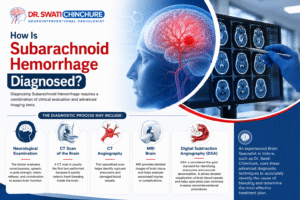
How Is Subarachnoid Hemorrhage Diagnosed?
Diagnosing Subarachnoid Hemorrhage requires a combination of clinical evaluation and advanced imaging tests.
The diagnostic process may include:
Neurological Examination
The doctor evaluates consciousness, speech, muscle strength, vision, reflexes, and coordination to assess brain function.
CT Scan of the Brain
A CT scan is usually the first test performed because it quickly detects fresh bleeding inside the brain.
CT Angiography
This specialized scan helps identify ruptured aneurysms and damaged blood vessels.
MRI Brain
MRI provides detailed images of brain tissue and helps evaluate associated injuries or complications.
Digital Subtraction Angiography (DSA)
DSA is considered the gold standard for identifying aneurysms and vascular abnormalities. It allows detailed visualization of brain blood vessels and helps specialists plan minimally invasive neurointerventional procedures.
An experienced Brain Specialist in Indore, such as Dr. Swati Chinchure, uses these advanced diagnostic techniques to accurately identify the cause of bleeding and determine the most effective treatment plan.
How Is Subarachnoid Hemorrhage Treatment in Indore Performed?
The treatment for Subarachnoid Hemorrhage depends on the cause of bleeding, the patient’s overall health, the severity of the hemorrhage, and how quickly medical care is received. Since this condition is a neurological emergency, treatment begins immediately after diagnosis to prevent further bleeding and protect the brain.
The primary goals of Subarachnoid Hemorrhage treatment in Indore are to:
- Stop the source of bleeding.
- Reduce pressure inside the brain.
- Prevent re-bleeding.
- Minimize brain damage.
- Reduce the risk of complications.
- Help patients recover safely.
Dr. Swati Chinchure, an experienced Brain Specialist in Indore, carefully evaluates each patient and recommends the most suitable treatment using advanced neurointerventional techniques whenever possible.
What Happens Immediately After You Reach the Hospital for Subarachnoid Hemorrhage Treatment in Indore?
The first few hours after a Subarachnoid Hemorrhage are extremely important. During this period, doctors focus on stabilizing the patient’s condition before performing any definitive procedure.
Emergency care may include:
- Continuous monitoring in the Intensive Care Unit (ICU).
- Controlling blood pressure to reduce the risk of further bleeding.
- Providing oxygen support if required.
- Managing severe headache with appropriate medications.
- Administering medicines to prevent seizures.
- Reducing brain swelling.
- Monitoring neurological function regularly.
Early emergency management plays a vital role in improving survival and increasing the chances of a successful recovery.
How Does Brain Aneurysm Coiling Help in Subarachnoid Hemorrhage Treatment in Indore?
Brain aneurysm coiling is one of the most effective minimally invasive procedures used to treat ruptured brain aneurysms.
During this procedure, a thin catheter is inserted through an artery in the wrist or groin and carefully guided to the affected blood vessel in the brain. Tiny platinum coils are then placed inside the aneurysm, causing it to clot and preventing further bleeding.
Compared to traditional open brain surgery, aneurysm coiling offers several benefits:
- Smaller incision with minimal trauma.
- Lower risk of complications.
- Shorter hospital stay.
- Faster recovery.
- Less postoperative discomfort.
Dr. Swati Chinchure has extensive experience in performing aneurysm coiling as part of advanced Subarachnoid Hemorrhage treatment in Indore, helping patients receive effective treatment with minimally invasive techniques.
When Is a Flow Diverter Recommended for Subarachnoid Hemorrhage Treatment in Indore?
Not all aneurysms can be treated with conventional coiling. Some aneurysms are larger or have a wide neck, making them difficult to seal using coils alone.
In such situations, a flow diverter may be recommended.
A flow diverter is a specially designed stent placed inside the affected artery. It redirects blood flow away from the aneurysm, allowing it to heal gradually while maintaining normal blood circulation to the brain.
This advanced neurointerventional procedure is especially beneficial for selected patients with complex aneurysms and offers excellent long-term results.
When Is Brain Surgery Required for Subarachnoid Hemorrhage?
Although many patients can be treated with minimally invasive neurointerventional procedures, some cases may require microsurgical clipping.
Brain surgery is usually considered when:
- The aneurysm is not suitable for coiling.
- The bleeding is extensive.
- The aneurysm’s location makes surgery a safer option.
- There are associated brain injuries requiring surgical treatment.
During clipping, a neurosurgeon places a small metal clip across the neck of the aneurysm to permanently stop blood flow into it.
Dr. Swati Chinchure works closely with multidisciplinary teams to ensure every patient receives the most appropriate treatment based on their individual condition.
What Complications Can Occur After a Subarachnoid Hemorrhage?
Even after successful treatment, some patients may develop complications that require careful monitoring.
These complications may include:
- Re-bleeding.
- Cerebral vasospasm (narrowing of brain arteries).
- Hydrocephalus (fluid accumulation in the brain).
- Brain swelling.
- Seizures.
- Memory problems.
- Difficulty speaking.
- Weakness in the arms or legs.
Regular follow-up with a Brain Specialist in Indore helps detect these complications early and ensures timely treatment.
How Long Does It Take to Recover After Subarachnoid Hemorrhage Treatment in Indore?
Recovery varies from person to person and depends on the severity of the hemorrhage, the patient’s age, overall health, and how quickly treatment was started.
Some patients recover within a few weeks, while others may need several months of rehabilitation.
Recovery often includes:
Physical Rehabilitation
Physiotherapy helps patients regain strength, balance, and mobility.
Speech Therapy
Speech therapy improves communication and swallowing difficulties that may occur after brain injury.
Cognitive Rehabilitation
Memory, concentration, and problem-solving skills can improve with structured cognitive exercises.
Emotional Recovery
Many patients experience anxiety or depression after a brain hemorrhage. Emotional support, counselling, and family involvement play an important role in complete recovery.
With timely Subarachnoid Hemorrhage treatment in Indore, many patients can gradually return to work, family life, and daily activities.
Can Subarachnoid Hemorrhage Be Prevented?
Although not every case can be prevented, several lifestyle changes can significantly reduce the risk.
Dr. Swati Chinchure recommends:
- Keeping blood pressure under control.
- Quitting smoking.
- Limiting alcohol consumption.
- Exercising regularly.
- Maintaining a healthy body weight.
- Following a balanced diet.
- Managing diabetes and cholesterol.
- Taking prescribed medications regularly.
- Undergoing routine health check-ups.
- Consulting a Brain Specialist in Indore if there is a family history of brain aneurysms.
Early screening for high-risk individuals can help detect aneurysms before they rupture.
What Can We Learn from a Real-Life Patient Scenario?
A 51-year-old woman from Indore suddenly developed an unbearable headache while at work. Within minutes, she experienced vomiting and became confused. Her family initially thought it was a severe migraine, but they immediately took her to the emergency department when her condition worsened.
Brain imaging confirmed a ruptured aneurysm causing a Subarachnoid Hemorrhage. After evaluation, Dr. Swati Chinchure performed a minimally invasive aneurysm coiling procedure to stop the bleeding.
Following intensive care and rehabilitation, the patient gradually recovered and returned to her normal routine over the next few months.
This example highlights the importance of recognizing symptoms early and seeking immediate Subarachnoid Hemorrhage treatment in Indore.
When Should You Consult a Brain Specialist in Indore for Subarachnoid Hemorrhage?
You should seek emergency medical attention if you experience:
- A sudden, severe headache.
- Neck stiffness.
- Repeated vomiting.
- Blurred or double vision.
- Sudden weakness in the face, arm, or leg.
- Difficulty speaking.
- Seizures.
- Confusion.
- Loss of consciousness.
Delaying treatment can increase the risk of permanent brain injury. Early consultation with Dr. Swati Chinchure, an experienced Brain Specialist in Indore, can improve treatment outcomes and support a faster recovery.
Why Do Patients Choose Dr. Swati Chinchure for Subarachnoid Hemorrhage Treatment in Indore?
Patients trust Dr. Swati Chinchure for her expertise in diagnosing and treating complex neurovascular disorders using advanced, minimally invasive techniques.
Her expertise includes:
- Brain aneurysm coiling.
- Flow diverter placement.
- Mechanical thrombectomy for acute stroke.
- Carotid artery stenting.
- Intracranial angioplasty and stenting.
- Cerebral AVM embolization.
- Neurovascular imaging and diagnosis.
- Personalized long-term neurological care.
With extensive experience and a patient-centered approach, she is committed to delivering high-quality neurological care and helping patients achieve the best possible recovery.
Frequently Asked Questions About Subarachnoid Hemorrhage Treatment in Indore
1. What is the average age for a Subarachnoid Hemorrhage?
Subarachnoid Hemorrhage most commonly affects adults between 40 and 60 years of age. However, younger individuals with brain aneurysms, inherited vascular disorders, or certain genetic conditions may also be at risk.
2. What are the first signs of a Subarachnoid Hemorrhage?
The most common symptom is a sudden, severe headache, often described as the “worst headache of life.” Other symptoms may include vomiting, neck stiffness, blurred or double vision, seizures, confusion, sensitivity to light, and loss of consciousness.
3. Who is most at risk for Subarachnoid Hemorrhage?
People with uncontrolled high blood pressure, smoking habits, excessive alcohol consumption, brain aneurysms, a family history of aneurysms, or certain inherited vascular disorders have a higher risk of developing a Subarachnoid Hemorrhage.
4. Can Subarachnoid Hemorrhage be cured?
Yes. Many patients recover successfully when diagnosed early and treated promptly. Advances in neurointerventional procedures, microsurgery, and critical care have significantly improved treatment outcomes.
5. How serious is a Subarachnoid Hemorrhage?
Subarachnoid Hemorrhage is a life-threatening medical emergency that requires immediate treatment. Delayed diagnosis or treatment can lead to permanent brain damage, disability, or death.
6. What is life like after a Subarachnoid Hemorrhage?
Many patients are able to return to their normal daily activities after appropriate treatment and rehabilitation. Recovery depends on the severity of the bleeding, overall health, and how quickly medical care was received.
7. How long does recovery take after Subarachnoid Hemorrhage treatment in Indore?
Recovery can take several weeks to several months, depending on the extent of the bleeding, the treatment performed, and the patient’s rehabilitation progress.
8. What is the 6-hour rule for Subarachnoid Hemorrhage?
A CT scan performed within six hours of symptom onset is highly accurate in detecting a Subarachnoid Hemorrhage. Seeking emergency medical care as soon as symptoms appear greatly improves the chances of early diagnosis and treatment.
9. Can Subarachnoid Hemorrhage occur without warning?
Yes. While some patients may experience warning headaches or minor symptoms beforehand, many cases occur suddenly without any prior warning signs, making immediate emergency evaluation essential.
10. When should I consult Dr. Swati Chinchure for Subarachnoid Hemorrhage treatment in Indore?
If you experience a sudden severe headache, seizures, vomiting, confusion, vision changes, weakness, or loss of consciousness, seek emergency medical attention immediately. Early consultation with Dr. Swati Chinchure for Subarachnoid Hemorrhage Treatment in Indore can improve treatment outcomes and reduce the risk of long-term neurological complications.
Conclusion: Why Is Early Subarachnoid Hemorrhage Treatment in Indore So Important?
Subarachnoid Hemorrhage is a medical emergency that should never be ignored. Prompt diagnosis, timely intervention, and expert neurological care can make a significant difference in recovery and quality of life. Recognizing the warning signs and seeking immediate treatment can help prevent serious complications and improve long-term outcomes.
If you or your loved one experiences symptoms such as a sudden severe headache, loss of consciousness, or neurological changes, do not delay medical evaluation.
For expert Subarachnoid Hemorrhage treatment in Indore, consult Dr. Swati Chinchure, an experienced Brain Specialist in Indore specializing in advanced neurointerventional procedures, brain aneurysm treatment, and comprehensive neurovascular care. Early diagnosis and the right treatment can save lives and help patients return to a healthier future.