
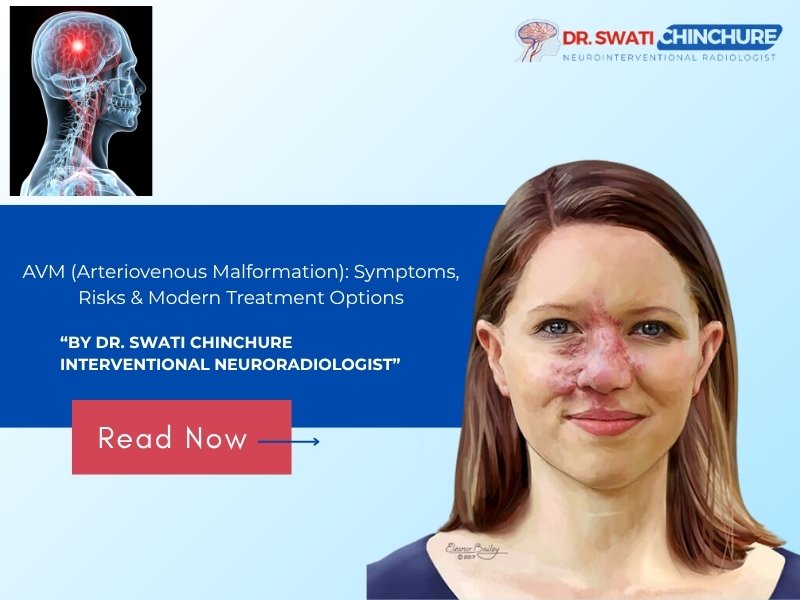
AVM or Arteriovenous Malformation is a condition related to abnormal blood vessels in the brain or spinal cord. In this condition, arteries and veins become connected directly without the normal small blood vessels called capillaries. This abnormal connection changes the normal flow of blood and increases pressure inside blood vessels. Over time, these blood vessels may become weak and increase the possibility of bleeding inside the brain.
Many people do not know they have AVM because symptoms may develop slowly or may not appear for years. Some patients discover AVM after severe headaches, seizures, dizziness, or sudden brain bleeding. Understanding the symptoms early is important because timely diagnosis may help reduce complications.
Today, advanced neurovascular imaging and minimally invasive procedures are improving the safety and effectiveness of Brain AVM treatment in Indore. Dr. Swati Chinchure focuses on neurovascular imaging and modern treatment planning for complex brain blood vessel disorders. Many people searching online for the Best Neurosurgeon in Indore want to understand AVM symptoms, risks, treatment options, and recovery in simple language.
What is AVM (Arteriovenous Malformation)?
Arteriovenous Malformation is an abnormal connection between arteries and veins. Normally, blood travels from arteries into tiny capillaries and then moves into veins. Capillaries help slow blood flow and allow oxygen to reach nearby tissues properly.
Brain AVM is considered serious because bleeding inside the brain may affect speech, memory, movement, vision, and other important functions.
Modern imaging techniques used for Brain AVM treatment in Indore help doctors study abnormal blood vessels carefully before deciding treatment options. Dr. Swati Chinchure explains that proper diagnosis is important because every AVM differs in size, location, and risk level.
People searching for the Best Neurosurgeon in Indore often ask whether AVM is cancer. AVM is not cancer. It is a blood vessel abnormality.
In AVM, capillaries are missing. Blood flows directly from arteries into veins with high pressure. Veins are usually not designed to handle this pressure, which can weaken blood vessels over time.
This abnormal blood flow may lead to:
- Reduced oxygen supply to brain tissues
- Increased pressure inside blood vessels
- Risk of brain bleeding
- Damage to nearby brain structures


Causes of AVM
The exact cause of AVM is still not completely understood. Most doctors believe AVM develops before birth during the formation of blood vessels in the fetus.
Congenital Blood Vessel Abnormality
Many patients receiving Brain AVM treatment in Indore are surprised because they never had symptoms earlier in life. Dr. Swati Chinchure often explains that AVM can remain silent for years before symptoms appear.
The Best Neurosurgeon in Indore usually recommends detailed imaging tests if neurological symptoms continue without a clear cause.
Most AVMs are congenital, which means they are present from birth. During fetal development, arteries and veins may not form normally, leading to abnormal connections.
Abnormal Blood Flow Development
Improper blood vessel formation may disturb the normal blood circulation pattern inside the brain.
Genetic Factors
Certain rare inherited conditions may slightly increase the possibility of blood vessel abnormalities.
Family History
Although uncommon, some families may have a higher risk of vascular disorders.
Common Symptoms of Brain AVM
Symptoms depend on the size and location of the AVM. Some patients may have mild symptoms, while others may develop serious neurological complications.
Emergency treatment becomes extremely important in such situations.
Advanced Brain AVM treatment in Indore focuses on early diagnosis to reduce the possibility of brain bleeding. Many people searching for the Best Neurosurgeon in Indore seek immediate medical advice after sudden neurological symptoms appear.
Severe or Recurrent Headaches
Headaches are among the most common symptoms of brain AVM. These headaches may feel different from regular headaches or migraines. Some patients describe them as intense pressure or throbbing pain.
Headaches may occur because abnormal blood vessels increase pressure inside the brain.
Many people seeking Brain AVM treatment in Indore visit a specialist after experiencing long-term headaches that do not improve with medications.
Seizures
AVM can disturb electrical activity inside the brain and trigger seizures. Symptoms may include body shaking, confusion, unconsciousness, or staring episodes.
Repeated seizures should never be ignored because they may indicate an underlying neurological condition.
Dr. Swati Chinchure recommends proper neurological evaluation if seizures occur without any known reason.
Weakness or Numbness
AVM affecting movement-related brain areas may cause weakness, numbness, or reduced strength in the arms or legs.
Some people may experience difficulty walking or balancing properly.
Speech Problems
If AVM affects speech centers in the brain, patients may struggle to speak clearly or understand language.
Vision Problems
Blurred vision, double vision, or partial vision loss may occur if AVM affects visual processing areas.
Dizziness and Balance Issues
Reduced oxygen supply to brain tissues may lead to dizziness, imbalance, or coordination difficulties.
Brain Hemorrhage
One of the most dangerous complications of AVM is bleeding inside the brain.
Symptoms of brain hemorrhage may include:
- Sudden severe headache
- Vomiting
- Loss of consciousness
- Paralysis
- Severe confusion
- Seizures
Risks Associated with Untreated AVM
Ignoring AVM symptoms may increase the risk of severe neurological complications.
Brain Bleeding
Weak blood vessels may rupture because of abnormal blood flow pressure. Brain bleeding can damage nearby tissues and become life-threatening.
Many patients choose Brain AVM treatment in Indore after symptoms begin affecting their work, studies, or quality of life. Dr. Swati Chinchure carefully evaluates bleeding risk before planning treatment.
People looking for the Best Neurosurgeon in Indore often want to understand whether every AVM requires treatment. Treatment decisions depend on multiple factors including size, location, and bleeding risk.

Stroke-Like Symptoms
Disturbed blood circulation may lead to weakness, numbness, or speech problems similar to stroke.
Permanent Neurological Damage
Untreated AVM may affect memory, coordination, speech, movement, and sensory functions.
Chronic Headaches and Seizures
Symptoms may become more severe over time if AVM is left untreated.
Emotional Stress and Anxiety
Living with neurological symptoms can affect emotional health and daily activities.
Diagnosis of AVM
Accurate diagnosis is important before planning treatment.
MRI Scan
MRI provides detailed images of brain tissues and blood vessels. It helps doctors understand the location and size of the AVM.
CT Scan
CT scans are commonly used to detect brain bleeding.
Cerebral Angiography
Cerebral angiography is one of the most detailed tests used for studying brain blood vessels. During this procedure, a special dye is injected into blood vessels and detailed images are captured.
This test helps doctors plan Brain AVM treatment in Indore more accurately.
Dr. Swati Chinchure uses advanced neurovascular imaging techniques to study abnormal blood vessel patterns carefully.
CT Angiography
This scan combines CT imaging with contrast dye to visualize blood vessels clearly.
Patients searching for the Best Neurosurgeon in Indore often ask whether angiography is painful. In most cases, the procedure is minimally invasive and performed under careful medical supervision.
Modern Treatment Options for AVM
Treatment depends on:
- Size of the AVM
- Brain location
- Bleeding history
- Patient age
- Overall health condition
Endovascular Embolization
Endovascular embolization is a minimally invasive procedure used to block abnormal blood flow.
Modern endovascular procedures are becoming an important part of Brain AVM treatment in Indore because they help reduce damage to surrounding brain tissues.
Dr. Swati Chinchure focuses on minimally invasive neurovascular procedures using advanced imaging guidance.
A thin catheter is inserted through blood vessels and guided carefully toward the AVM. Special materials are then used to close abnormal blood vessel connections.
Benefits may include:
- Smaller incisions
- Less blood loss
- Faster recovery
- Reduced surgical trauma
Microsurgical Removal
The Best Neurosurgeon in Indore usually studies detailed imaging findings before deciding whether surgery is suitable.
In some cases, surgery may be necessary to remove the AVM completely.
Surgery may be recommended when:
- Bleeding risk is high
- Symptoms are severe
- AVM is surgically accessible
Stereotactic Radiosurgery
This treatment uses focused radiation beams to gradually close abnormal blood vessels over time.
It may be suitable for smaller AVMs located deep inside the brain.
Combination Therapy
Advanced planning for Brain AVM treatment in Indore allows doctors to create personalized treatment strategies according to patient condition.
Sometimes doctors combine multiple treatments for better results.
For example:
- Embolization before surgery
- Radiosurgery after embolization
Recovery After AVM Treatment
Some patients recover quickly after minimally invasive procedures, while others may require rehabilitation support.
Recovery depends on:
- Type of treatment
- Severity of symptoms
- Presence of brain bleeding
- Overall neurological condition
Physical Rehabilitation
Physiotherapy may improve movement, strength, and balance.
Speech Therapy
Patients with speech problems may benefit from speech rehabilitation.
Follow-Up Imaging
Regular scans help doctors monitor healing and treatment progress.
Emotional Support
Neurological conditions may increase stress and anxiety. Emotional support from family members and healthcare professionals may help recovery.
Patients receiving Brain AVM treatment in Indore are often advised to continue long-term follow-up monitoring. Dr. Swati Chinchure emphasizes regular imaging after neurovascular treatment.
Lifestyle Tips for Better Brain Health
Healthy lifestyle habits may support brain recovery and vascular health.
Control Blood Pressure
High blood pressure may increase stress on weakened blood vessels.
Avoid Smoking and Alcohol
Smoking negatively affects blood circulation and vascular health.
Eat Nutritious Food
Balanced nutrition supports healing and brain function.
Stay Physically Active
Regular light exercise may improve circulation and reduce stress.
Sleep Properly
Good sleep supports neurological recovery.
Manage Stress
Meditation, relaxation techniques, and emotional support may help reduce stress levels.
People searching for the Best Neurosurgeon in Indore are often advised to combine healthy lifestyle habits with medical care for better neurological health.
FAQs About AVM (Arteriovenous Malformation)
What is AVM in the brain?
AVM is an abnormal connection between arteries and veins where blood bypasses normal capillaries.
Is AVM dangerous?
Yes, untreated AVM may increase the risk of brain bleeding and neurological damage.
What are the early symptoms of AVM?
Common symptoms include headaches, seizures, dizziness, weakness, numbness, and speech difficulty.
Can AVM exist without symptoms?
Yes, some people may have AVM for years without symptoms.
Is AVM cancer?
No, AVM is not cancer. It is a blood vessel abnormality.
Can AVM be treated without open surgery?
Yes, some AVMs may be treated using minimally invasive endovascular procedures or radiosurgery.
What is embolization in AVM treatment?
Embolization is a minimally invasive procedure used to block abnormal blood flow inside the AVM.
How long does recovery take after AVM treatment?
Recovery varies depending on treatment type and overall neurological condition.
Can AVM return after treatment?
Regular follow-up imaging is important because recurrence depends on treatment type and AVM structure.
Who should consult a specialist for AVM symptoms?
Anyone experiencing severe headaches, seizures, sudden weakness, or unexplained neurological symptoms should seek medical evaluation promptly.