
The brain, spinal cord, and blood vessels supplying the nervous system control many essential functions of the human body. Problems affecting these structures can lead to headaches, weakness, numbness, difficulty walking, seizures, back pain, stroke, or other neurological symptoms. Early evaluation and appropriate treatment can be important when such symptoms appear.
Choosing the Best Neurosurgeon in Indore depends on the patient’s condition, the specialist’s qualifications, experience, treatment expertise, and access to appropriate diagnostic and therapeutic facilities.
Modern neurological care includes not only traditional surgery but also minimally invasive and image-guided procedures. Neurointerventional treatments can be used for selected conditions involving the brain’s blood vessels, including some acute strokes and aneurysms.
According to the doctor information provided, Dr. Swati Chinchure is a Consultant Neurointervention specialist with around 10 years of experience in neuro and spinal interventions. She has completed DM in Neuroradiology and Neurointervention from Sree Chitra Tirunal Institute for Medical Sciences and Technology, Trivandrum, Kerala.
Her listed areas of expertise include acute stroke neurointervention, mechanical thrombectomy, aneurysm coiling, flow-diverter placement, intracranial stenting, and other neurointerventional procedures.
About Dr. Swati Chinchure – Neuro and Spinal Intervention Specialist
Dr. Swati Chinchure Indore is a Consultant Neurointervention specialist with specialized education and experience in interventional neuroradiology.
According to the provided profile, her qualifications include:
- MBBS – Government Medical College, Nanded
- DMRD – Indira Gandhi Government Medical College, Nagpur
- DNB – Yashoda Hospitals, Hyderabad
- DM Neuroradiology – Sree Chitra Tirunal Institute, Trivandrum
- FNVIR Fellowship in Neurointerventions
She has approximately 10 years of experience in neuro and spinal interventions.
Her professional experience includes work as a Consultant Neurointervention specialist at Medanta Hospital, Indore, and Vishesh Jupiter Hospital, Indore, as well as previous experience at Aster Medcity, Kochi, and Medanta – The Medicity, Gurgaon.
Her academic and professional profile also lists 19 national and international publications, 2 book chapters, and 28 conference paper presentations.
Why Choose the Best Neurosurgeon in Indore for Brain and Spine Problems?
Brain and spine conditions can range from common degenerative problems to complex vascular and neurological disorders. The right specialist depends on the symptoms and diagnosis.
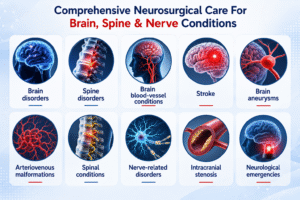
A qualified Neurosurgeon in Indore may evaluate conditions involving:
- Brain disorders
- Spine disorders
- Brain blood-vessel conditions
- Stroke
- Brain aneurysms
- Arteriovenous malformations
- Spinal conditions
- Nerve-related disorders
- Intracranial stenosis
- Neurological emergencies
Neurosurgeons and neurologists often work as part of multidisciplinary teams to determine the most appropriate treatment for brain, spine, and nervous-system conditions.
A Brain Specialist in Indore can help determine whether a patient’s symptoms require medication, monitoring, rehabilitation, minimally invasive intervention, or surgery.
Common Brain Conditions Requiring Specialist Evaluation
Many neurological conditions can affect the brain and its surrounding blood vessels.
Some conditions include:
- Brain aneurysm
- Brain hemorrhage
- Ischemic stroke
- Arteriovenous malformation
- Brain tumors
- Hydrocephalus
- Intracranial stenosis
- Seizure-related conditions
- Head injuries
- Certain nerve disorders
The treatment depends on the specific diagnosis, severity, location, overall health, and neurological status of the patient.
A Brain Specialist in Indore may recommend neurological examination, CT scan, MRI, CT angiography, MR angiography, digital subtraction angiography, or other investigations when clinically appropriate.
Stroke Treatment in Indore – Why Every Minute Matters
A stroke occurs when blood supply to part of the brain becomes blocked or when bleeding occurs in the brain. Stroke can cause sudden weakness, numbness, difficulty speaking, vision problems, confusion, or difficulty walking.
Warning signs can include:
- Sudden weakness of the face, arm, or leg
- Difficulty speaking
- Trouble understanding speech
- Sudden vision problems
- Sudden dizziness
- Loss of balance
- Sudden severe headache
- Difficulty walking
Stroke symptoms require emergency medical attention.
For selected patients with acute ischemic stroke caused by a large blood-vessel blockage, mechanical thrombectomy may be used to remove the clot. The procedure is performed through a catheter inserted into a blood vessel and guided toward the blocked artery.
The provided profile identifies Dr. Swati Chinchure Stroke Treatment expertise in acute stroke neurointervention, including mechanical thrombectomy.
Therefore, Stroke Treatment in Indore may involve rapid imaging, neurological assessment, appropriate emergency treatment, and neurointerventional procedures in eligible patients.
What Is Mechanical Thrombectomy?
Mechanical thrombectomy is an endovascular procedure used in selected patients with certain types of acute ischemic stroke.
During the procedure, a catheter is guided through the blood vessels toward the blocked artery. Specialized devices can then be used to remove the clot and restore blood flow.
The procedure is not appropriate for every stroke patient. Eligibility depends on factors such as the type of stroke, location of the blockage, timing, brain imaging findings, and overall clinical condition.
A Neurointervention Specialist in Indore can assess whether an acute stroke patient may be suitable for an endovascular treatment approach.
Early recognition and rapid emergency evaluation are essential because stroke treatment is highly time-sensitive.
Brain Aneurysm – Causes, Symptoms and Treatment
A brain aneurysm is a weak or abnormal area in the wall of a blood vessel in the brain that can enlarge and, in some cases, rupture.
An unruptured aneurysm may sometimes cause no symptoms. When symptoms occur, they can depend on its size and location.
A ruptured aneurysm can cause:
- Sudden severe headache
- Nausea and vomiting
- Neck stiffness
- Loss of consciousness
- Seizures
- Neurological weakness
- Vision problems
A sudden severe headache, especially when described as the worst headache of one’s life, requires emergency medical assessment.
Treatment options depend on the aneurysm’s size, location, shape, rupture status, and other patient-specific factors.
Aneurysm Coiling – A Minimally Invasive Treatment
Aneurysm coiling is an endovascular treatment used for selected brain aneurysms.
In this procedure, a catheter is guided through the blood vessels to the aneurysm. Small coils are then placed inside the aneurysm to promote clot formation and reduce blood flow into the aneurysm.
Some aneurysms may also require balloon-assisted or stent-assisted coiling.
The provided professional profile lists Dr. Swati Chinchure Neurointervention expertise in aneurysm coiling, including balloon- and stent-assisted procedures.
The choice between endovascular treatment and surgical clipping depends on the individual aneurysm and patient characteristics. A specialist evaluation is necessary to determine the most suitable approach.
Flow Diverter Placement for Brain Aneurysms
A flow diverter is a specialized stent-like device used for selected intracranial aneurysms.
Instead of placing coils directly inside every aneurysm, a flow diverter is positioned across the opening of the aneurysm. It changes blood flow patterns and encourages the vessel wall to heal over time.
Flow diversion may be considered for particular aneurysms based on:
- Location
- Size
- Shape
- Neck width
- Rupture status
- Blood vessel anatomy
According to the provided profile, Dr. Swati Chinchure Neuro and Spinal Interventions include experience with flow-diverter placement.
Intracranial Stenting and Carotid Stenosis
Narrowing of arteries supplying the brain can reduce blood flow and increase the risk of stroke.
Carotid stenosis refers to narrowing in the carotid arteries, which supply blood to the brain.
Depending on the patient’s condition, treatment may include:
- Medical management
- Lifestyle modification
- Monitoring
- Carotid procedures
- Stenting in selected patients
The provided service profile lists carotid stenosis stenting among the services offered.
A Neurointervention Specialist in Indore can evaluate vascular imaging and determine whether an endovascular procedure is appropriate.
Cerebral AV Malformation and Embolization
A cerebral arteriovenous malformation, or AVM, is an abnormal connection between arteries and veins in the brain.
Some AVMs may not cause symptoms, while others can lead to:
- Headaches
- Seizures
- Neurological symptoms
- Brain bleeding
- Weakness
- Problems with speech or vision
Treatment depends on the size, location, vascular anatomy, symptoms, and bleeding risk.
One treatment option is embolization, an endovascular procedure in which material is delivered through a catheter to reduce or block abnormal blood flow through the AVM.
The provided profile lists cerebral AV malformation embolization as one of Dr. Swati Chinchure’s services.
Spine Problems and Neuro-Spinal Treatment
Spinal disorders can affect the bones, discs, nerves, spinal cord, and surrounding structures.
Common symptoms may include:
- Back pain
- Neck pain
- Pain radiating into the arms or legs
- Numbness
- Tingling
- Muscle weakness
- Difficulty walking
- Balance problems
Some spine conditions improve with conservative management, while others may require specialist intervention.
A Spine Specialist in Indore can assess symptoms and determine whether imaging, medication, physiotherapy, injections, minimally invasive treatment, or surgery may be appropriate.
The provided professional profile describes Dr. Swati Chinchure as a specialist in Neuro and Spinal Interventions.
When Should You Consult a Spine Specialist in Indore?
Persistent or worsening spinal symptoms should not always be treated as ordinary back pain.
Consider specialist evaluation when you experience:
- Persistent back pain
- Severe neck pain
- Pain spreading to the arms or legs
- Numbness or tingling
- Progressive weakness
- Difficulty walking
- Loss of balance
- Symptoms following significant trauma
- Problems controlling bladder or bowel function
Some neurological symptoms can indicate nerve or spinal cord compression and require urgent assessment.
A Spine Specialist in Indore can evaluate the symptoms and recommend appropriate diagnostic tests.
Diagnosis for Brain and Spine Conditions
Accurate diagnosis is an important part of neurological care.
Depending on the symptoms, a specialist may recommend:
- Neurological examination
- MRI Brain
- MRI Spine
- CT Brain
- CT Spine
- CT Angiography
- MR Angiography
- Digital Subtraction Angiography
- Other vascular imaging
- Blood investigations
Brain imaging such as MRI or CT can help doctors understand the location and characteristics of neurological abnormalities and plan treatment.
For vascular conditions such as aneurysms, additional vascular imaging may be required to understand blood-vessel anatomy before treatment.
Brain Surgery in Indore – When Is It Required?
Not every brain condition requires surgery.
Depending on the diagnosis, treatment may involve:
- Observation
- Medicines
- Rehabilitation
- Endovascular procedures
- Minimally invasive procedures
- Conventional surgery
- Radiation-based treatment
- A combination of treatments
Brain surgery may be considered for selected conditions such as certain brain tumors, bleeding, vascular abnormalities, hydrocephalus, or other structural problems.
The surgical approach depends on the location and type of condition. Modern brain surgery may use advanced imaging and computer-assisted planning to improve precision.
A Brain Specialist in Indore can help determine whether surgery is necessary or whether a less invasive treatment may be appropriate.
Spine Surgery in Indore – Treatment Options
Spine Surgery in Indore may be recommended for selected patients when symptoms are severe, progressive, or associated with neurological compression or structural problems that are unlikely to improve adequately with conservative care.
Possible surgical approaches vary according to the condition and may include:
- Decompression procedures
- Disc-related surgery
- Spinal stabilization
- Fusion procedures
- Minimally invasive spinal procedures
- Other specialized interventions
The decision for surgery should be based on clinical examination, imaging findings, symptoms, and the patient’s overall health.
Neurointerventional Procedures – An Alternative to Open Surgery in Selected Cases
Neurointervention uses catheter-based techniques to diagnose and treat selected conditions involving blood vessels of the brain and spine.
Potential procedures include:
- Mechanical thrombectomy
- Aneurysm coiling
- Balloon-assisted coiling
- Stent-assisted coiling
- Flow-diverter placement
- Intracranial stenting
- Carotid stenting
- AVM embolization
These procedures are not suitable for every patient. The appropriate treatment depends on the individual’s condition and vascular anatomy.
The expertise of a Neurointervention Specialist in Indore is particularly relevant when a vascular neurological condition requires catheter-based treatment.
Experience and Qualifications of Dr. Swati Chinchure
According to the provided profile, Dr. Swati Chinchure has completed extensive education and specialized training in neuroradiology and neurointervention.
Educational Qualifications
- MBBS – Government Medical College, Nanded
- DMRD – Indira Gandhi Government Medical College, Nagpur
- DNB – Yashoda Hospitals, Hyderabad
- DM Neuroradiology – Sree Chitra Tirunal Institute, Trivandrum
- FNVIR Fellowship in Neurointerventions
Her specialized DM training in neuroradiology and neurointervention provides a strong foundation for image-guided treatment of neurological vascular conditions.
Professional Experience of Dr. Swati Chinchure
The provided professional information lists:
- Consultant Neurointerventions – Medanta Hospital, Indore
- Consultant Neurointerventions – Vishesh Jupiter Hospital, Indore
- Consultant Neurointerventions – Aster Medcity, Kochi
- Associate Consultant Interventional Neuroradiology – Medanta – The Medicity, Gurgaon
Her academic profile also includes:
- 19 national and international publications
- 2 book chapters
- 28 conference paper presentations
This combination of clinical experience and academic involvement contributes to her expertise in neurointerventional care.
Services Offered by Dr. Swati Chinchure
According to the provided doctor profile, Dr. Swati Chinchure Indore provides neurointerventional services including:
- Subarachnoid hemorrhage and intracranial bleed management
- Brain aneurysm coiling
- Acute stroke thrombectomy
- Carotid stenosis stenting
- Cerebral AV malformation embolization
- Flow-diverter placement
- Intracranial stenting
- Other neuro and spinal interventions
The exact procedure recommended depends on the patient’s diagnosis and medical condition.
Recovery After Brain or Neurointerventional Treatment
Recovery varies considerably depending on the condition and procedure.
After brain surgery, patients may need hospital monitoring, imaging, medicines, and rehabilitation. Depending on the neurological condition, rehabilitation may include physical, occupational, or speech therapy.
After neurointerventional procedures, the medical team monitors the patient for complications and assesses neurological recovery.
Recovery may depend on:
- Type of condition
- Severity of neurological damage
- Procedure performed
- Patient’s age
- Overall health
- Presence of complications
- Rehabilitation requirements
Patients should follow their treating team’s instructions regarding medicines, activity, wound care, follow-up visits, and rehabilitation.
Rehabilitation After Brain and Spine Treatment
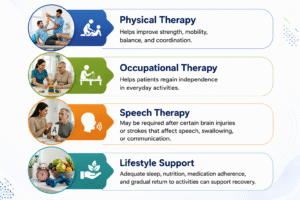
Rehabilitation can be an important part of neurological recovery.
Depending on the patient’s needs, rehabilitation may include:
Physical Therapy
Helps improve strength, mobility, balance, and coordination.
Occupational Therapy
Helps patients regain independence in everyday activities.
Speech Therapy
May be required after certain brain injuries or strokes that affect speech, swallowing, or communication.
Lifestyle Support
Adequate sleep, nutrition, medication adherence, and gradual return to activities can support recovery.
After brain tumor treatment, for example, rehabilitation may involve physical, occupational, or speech therapy depending on the functions affected.
Benefits of Early Neurological Evaluation
Early specialist evaluation can help:
- Identify the underlying problem
- Recognize neurological warning signs
- Determine appropriate imaging
- Understand treatment options
- Reduce delays in emergency conditions
- Plan minimally invasive treatment when appropriate
- Start rehabilitation at the right time
- Monitor long-term recovery
In emergency conditions such as stroke or brain hemorrhage, rapid evaluation is particularly important.
When Should You See a Brain Specialist in Indore?
You should consider neurological evaluation if you experience:
- Persistent or severe headaches
- Recurrent seizures
- Sudden weakness
- Numbness
- Difficulty speaking
- Vision changes
- Balance problems
- Unexplained dizziness
- Memory or behavioral changes
- Persistent back or neck pain
- Difficulty walking
- Symptoms following head or spinal trauma
Some symptoms require emergency care rather than a routine appointment. Sudden weakness, facial drooping, speech difficulty, or other signs of stroke should be treated as an emergency.
Why Choose Dr. Swati Chinchure for Neurointerventional Care?
Dr. Swati Chinchure Neurointervention brings specialized training in neuroradiology and neurointervention along with clinical experience in advanced endovascular procedures.
Her provided profile highlights:
- Around 10 years of experience
- DM in Neuroradiology and Neurointervention
- FNVIR Fellowship in Neurointerventions
- Experience at Medanta Hospital, Indore
- Experience at Vishesh Jupiter Hospital, Indore
- Experience at Aster Medcity
- Experience at Medanta – The Medicity
- 19 publications
- 2 book chapters
- 28 conference presentations
Her listed services cover several complex vascular neurological conditions.
For patients searching for the Best Neurosurgeon in Indore, it is important to understand that neurointervention and conventional neurosurgery are related but distinct areas. The appropriate specialist depends on the patient’s diagnosis and required treatment.
Best Neurosurgeon in Indore – Choosing the Right Specialist
The Best Neurosurgeon in Indore should be selected based on the patient’s specific neurological condition rather than the name of a procedure alone.
Important factors include:
- Medical qualifications
- Specialized training
- Clinical experience
- Expertise in the relevant condition
- Availability of advanced imaging
- Neurointerventional facilities when needed
- Surgical expertise when required
- Rehabilitation support
- Clear communication
- Multidisciplinary care
Patients with vascular brain conditions may specifically need a Neurointervention Specialist in Indore, while patients with certain structural brain or spine disorders may require a neurosurgical consultation.
Summary
Brain and spine conditions can range from relatively manageable disorders to life-threatening neurological emergencies. Symptoms such as sudden weakness, speech difficulty, seizures, severe headache, loss of balance, or loss of consciousness should receive prompt medical attention.
The Best Neurosurgeon in Indore should provide treatment based on accurate diagnosis, specialized expertise, appropriate imaging, and the patient’s individual needs.
Dr. Swati Chinchure is a Consultant Neurointervention specialist with specialized qualifications in neuroradiology and neurointervention. According to the provided profile, she has approximately 10 years of experience and has worked at major hospitals including Medanta Hospital, Indore, Vishesh Jupiter Hospital, Indore, Aster Medcity, Kochi, and Medanta – The Medicity, Gurgaon.
Her listed expertise includes acute stroke thrombectomy, aneurysm coiling, flow-diverter placement, intracranial stenting, carotid stenosis stenting, and cerebral AV malformation embolization.
For patients requiring Neuro and Spine Treatment in Indore, the appropriate specialist and treatment should always be determined after a detailed clinical evaluation.
FAQs – Best Neurosurgeon in Indore
Who is the Best Neurosurgeon in Indore?
The Best Neurosurgeon in Indore should be chosen according to qualifications, specialized training, clinical experience, and expertise relevant to the patient’s neurological condition. Dr. Swati Chinchure is a Consultant Neurointervention specialist with specialized training in neuroradiology and neurointervention.
What does a Neurosurgeon in Indore treat?
A Neurosurgeon in Indore may evaluate and treat selected conditions affecting the brain, spinal cord, nerves, and related structures. Treatment can include conservative care, surgery, or minimally invasive procedures depending on the diagnosis.
What is a Neurointervention Specialist in Indore?
A Neurointervention Specialist in Indore performs image-guided, catheter-based procedures for selected neurological and vascular conditions such as acute ischemic stroke, brain aneurysms, vascular malformations, and arterial narrowing.
What is mechanical thrombectomy?
Mechanical thrombectomy is a catheter-based procedure used in selected patients with acute ischemic stroke caused by certain large-vessel blockages. A specialized device is used to remove the clot and restore blood flow.
What is aneurysm coiling?
Aneurysm coiling is an endovascular procedure in which small coils are placed inside a brain aneurysm to reduce blood flow into the aneurysm. Balloon- or stent-assisted techniques may be used in selected cases.
What is flow-diverter placement?
A flow diverter is a specialized device placed across the opening of certain brain aneurysms to alter blood flow and encourage healing of the vessel wall.
When should I consult a Brain Specialist in Indore?
A Brain Specialist in Indore should be consulted for persistent or unusual neurological symptoms such as recurrent seizures, severe headaches, weakness, numbness, speech problems, vision changes, or balance difficulties.
When is Spine Surgery in Indore required?
Spine Surgery in Indore may be considered for selected structural spinal conditions, particularly when symptoms are severe, progressive, or associated with significant nerve or spinal cord compression.
What services does Dr. Swati Chinchure provide?
According to the provided profile, Dr. Swati Chinchure provides services including acute stroke thrombectomy, aneurysm coiling, carotid stenosis stenting, cerebral AV malformation embolization, flow-diverter placement, and intracranial stenting.
What are Dr. Swati Chinchure’s qualifications?
Dr. Swati Chinchure Indore has MBBS, DMRD, DNB, DM in Neuroradiology, and FNVIR fellowship training in Neurointerventions according to the provided profile.
How much experience does Dr. Swati Chinchure have?
The provided profile states approximately 10 years of experience in Neuro and Spinal Interventions.
What is Dr. Swati Chinchure’s area of specialization?
Dr. Swati Chinchure Neuro and Spinal Interventions specializes in neurointerventional and neuroradiological procedures, particularly vascular neurological conditions.
Conclusion – Best Neurosurgeon in Indore
If you or a family member develops sudden neurological symptoms, persistent headaches, seizures, weakness, numbness, stroke symptoms, or significant spine-related problems, timely medical evaluation is important.
The Best Neurosurgeon in Indore is not determined by one procedure or one symptom. The right specialist depends on the underlying diagnosis and whether the patient requires neurological management, conventional neurosurgery, spine treatment, or minimally invasive neurointervention.
With specialized training in neuroradiology and neurointervention, around 10 years of experience, and expertise in procedures such as mechanical thrombectomy, aneurysm coiling, flow-diverter placement, intracranial stenting, and AVM embolization, Dr. Swati Chinchure provides specialized neurointerventional care in Indore according to the provided professional information.
For Neuro and Spine Treatment in Indore, an appropriate specialist evaluation can help determine the diagnosis, treatment options, expected recovery, and need for follow-up or rehabilitation.